Why Centralize Waste?
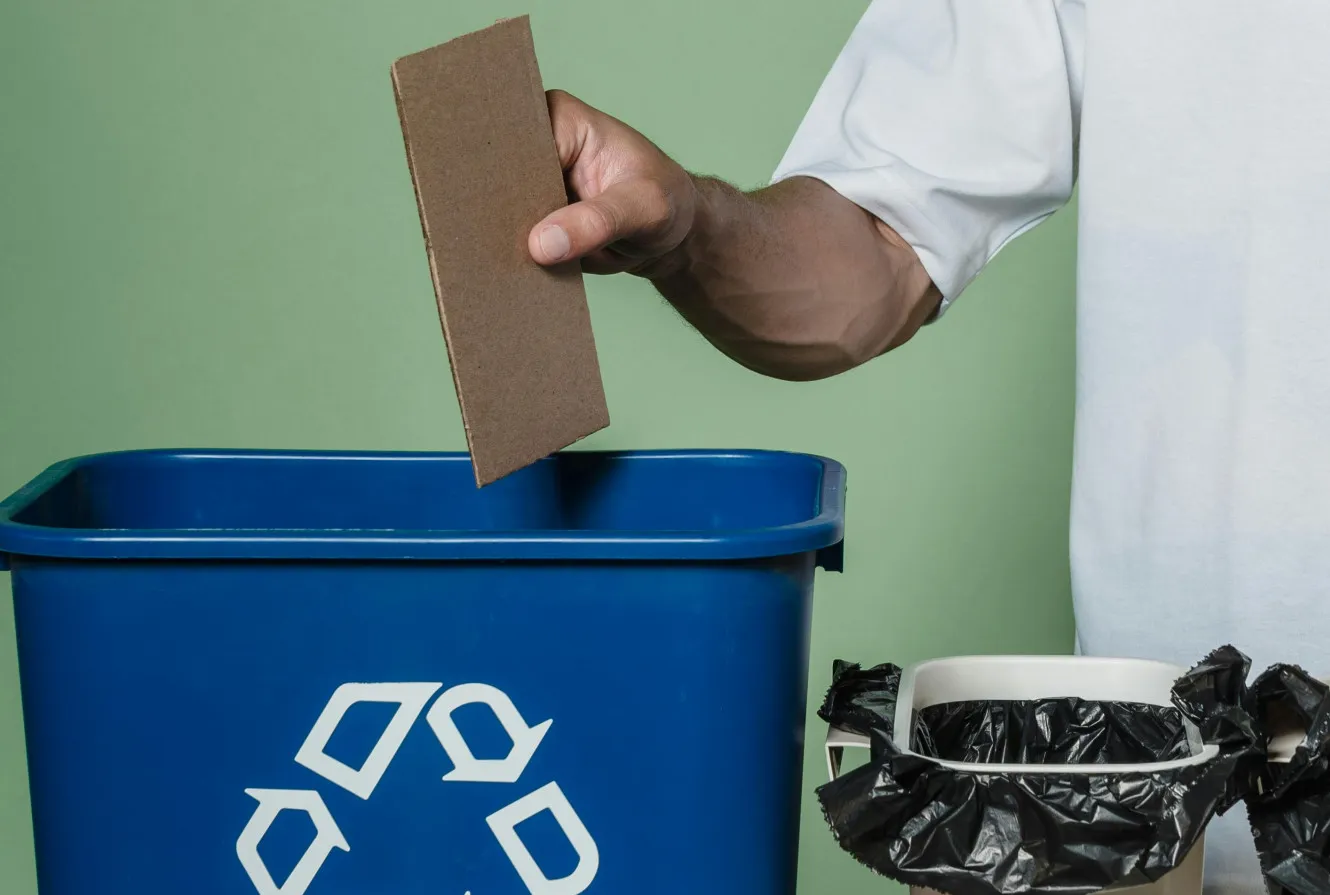
Replacing individual desk-side bins with shared, three-stream waste stations (recycling, paper, landfill) in high-traffic areas reduces plastic liners, improves sorting accuracy, reduces pest risk, and improves Facilities efficiency, while saving money and reducing emissions.
More information about waste at Columbia
Step-by-step plan
Pre-analysis meeting
- Meeting between Office of Sustainability and client school/department
- Identify workstations for transition
- Select central waste collection points
- Identify service improvement change (Facil)
Internal preparations
Office of Sustainability will:
- Generate expected savings report
- Finalize plans and timeline
Notice to Facilities
- Office of Sustainability notifies Facilities of transition plan
- Facilities delivers central bins (arranged by Office of Sustainability)
Email notice
Office of Sustainability provides draft email template to impacted employees that:
- Introduces Waste Centralization
- Explains why it’s beneficial
- Sets date for live presentation and waste sorting education game, Know Where to Throw
Live presentation
Office of Sustainability will present to employees:
- Why Waste Centralization is beneficial
- Know Where to Throw game
- The new waste collection point layout
- Go-live implementation date
- Answer questions
Implementation
- Collect bins as per agreed plan
Post-implementation check-in
Meet with Office of Sustainability to:
- Discuss any challenges
- Office of Sustainability will complete post implementation survey
- Office of Sustainability will write news story
Click on each tab to view steps to waste centralization.