Undergraduate Capstone Project Translates Plan 2030 into Action-Based Campus Program
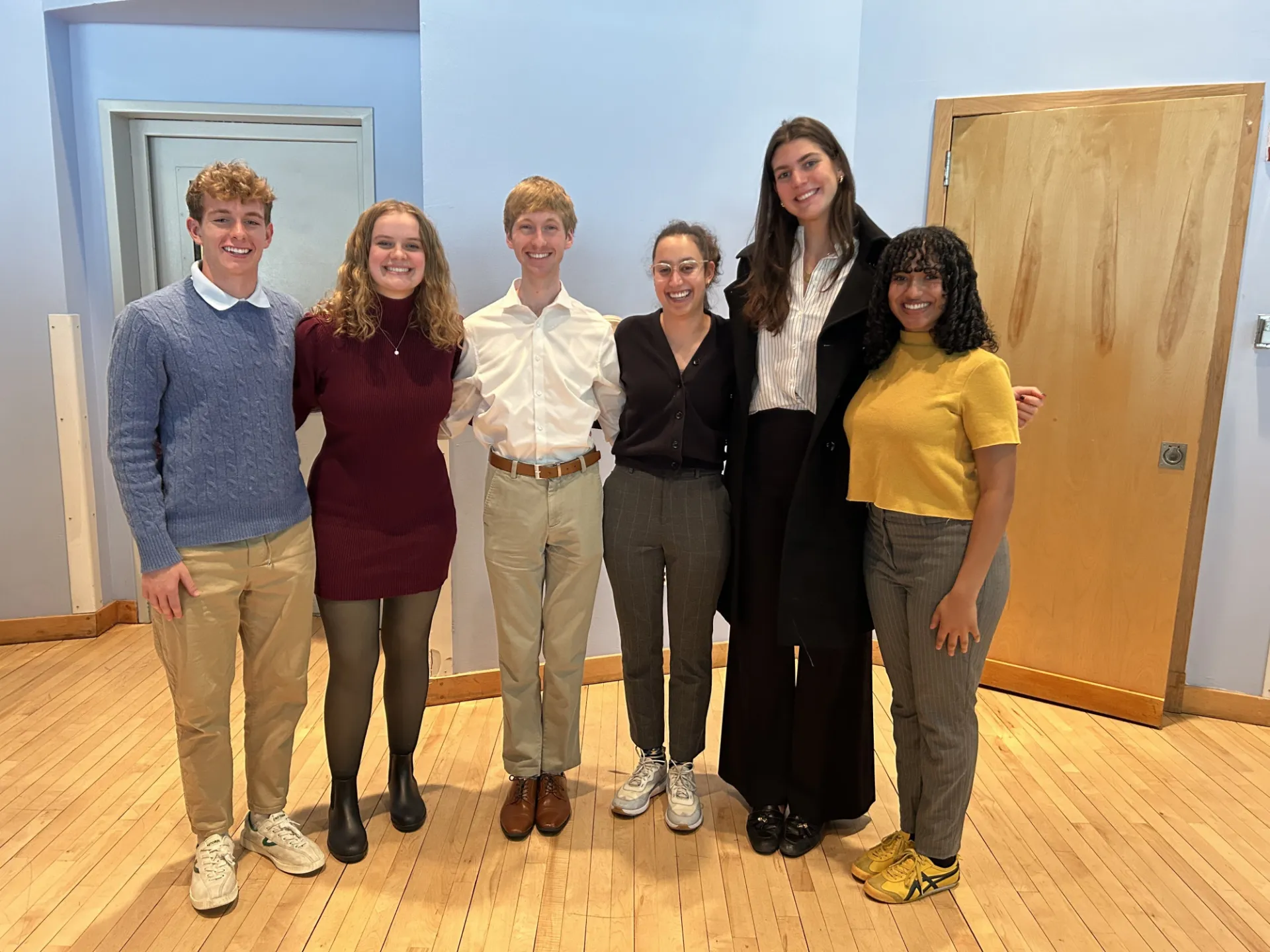
As part of their coursework, a Sustainable Development capstone team acted as consultants on a real-world sustainability project for Columbia University’s Office of Sustainability. Led by Professor Jenna Lawrence, the group was asked to design a practical, action-based campus engagement program that helps schools and departments advance the goals of Plan 2030.
Building on insights from the office’s 2024 Think Tank engagement program, the project focused on turning sustainability strategy into everyday operational change through initiatives that are high-impact, easy to implement, and supported by clear metrics. The resulting framework emphasizes broad participation while avoiding the complexity that often limits adoption at the department level.
The capstone team concentrated on centralizing office practices across three key areas—waste, print, and water—identified as priority opportunities for culture change and emissions reduction. Through site audits at Hogan Hall and the Lee C. Bollinger Forum, the students documented existing conditions and modeled future scenarios, finding that shifting away from deskside waste bins and personal printers could significantly reduce material use and operational inefficiencies. Their analysis showed that proposed changes at the Climate School alone could reduce the total number of bins by nearly 70 percent, save thousands of plastic liners annually, and meaningfully cut associated carbon emissions. Interviews with Facilities and Operations, Columbia Print, Barnard College, Columbia Housing, and peer institutions reinforced that successful centralization depends on strong communication, leadership support, and consistent education for frontline staff.
Drawing on these findings, the team developed a branded program framework—S.O.A.R. (Sustainable Office Advancement Roadmap)—that guides departments from audit to action to adoption. The final deliverables included a research report, a draft public-facing website to track participation and key performance indicators, a communications toolkit, and an outreach deck designed to secure departmental sign-on. Together, these materials provide the Office of Sustainability with a scalable, data-driven program that supports waste reduction, sustainable procurement, and culture change, while clearly demonstrating environmental impact and cost savings across campus.
This project supports the Office of Sustainability’s Campus as Lab (CAL) initiative, which allows students to use their coursework to solve real-world sustainability challenges on Columbia’s campuses.