The first of the Circular Economy Club’s projects focuses on strengthening Columbia’s ReUse program, which enables departments to exchange surplus furniture and equipment. Through market research, stakeholder interviews, and systems-thinking analysis, students are identifying opportunities to improve the platform’s usability, outreach, and overall impact on campus material flows.
“Through benchmarking with peer universities’ reuse programs like BEN’s Attic by University of Pennsylvania, UChicago Rheaply by University of Chicago, and UW Surplus Program by University of Washington, we identified several best practices that can strengthen Columbia’s ReUse program,” said Laras Fatmasiwi, a graduate student in the School of Professional Studies Sustainability Management (SUMA) program and member of the Circular Economy Club. “Some of these practices include centralized inventory management, using a designated warehouse, consistent internal communications, and creating a University policy to support reuse on campus.”
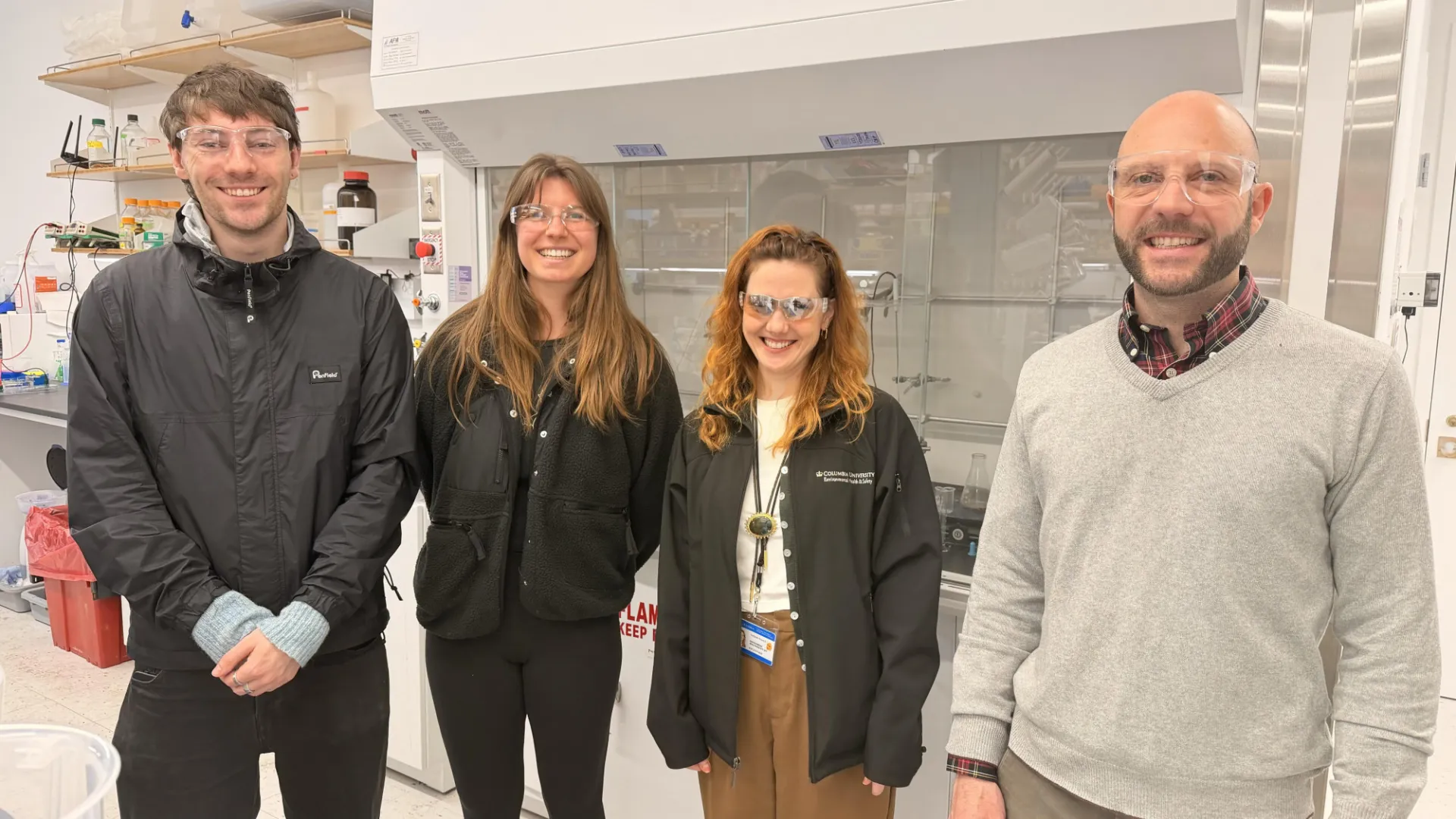
The second project is a Columbia-specific GreenLabs case study, conducted in partnership with the Environmental Health and Safety (EH&S) office. The initiative evaluates how the GreenLabs framework can be implemented across multiple research labs — spaces that are traditionally resource- and waste-intensive. The program promotes sustainable lab operations through a checklist covering areas such as energy efficiency, waste reduction, sustainable purchasing, and chemical management.
A key focus of the GreenLabs effort is addressing laboratory waste streams, particularly focusing on three aspects: glove waste, pipette tip box waste, and overall waste management, while helping lab users understand the dos and don’ts of recycling. By piloting sustainability practices in selected labs, the club will help identify financial impacts and barriers to adoption, testing operational solutions, and generating data to support broader campus rollout.
“It’s shocking to realize how much waste research labs generate,” said Lauren Wakeman, a graduate student in the SUMA program and member of the Circular Economy Club. “There’s a clear need to push harder for initiatives that address this. From the interviews we’ve conducted so far, it’s encouraging that many people are genuinely interested in making the shift toward more sustainable practices. The biggest barrier is cost so ensuring that proposed solutions also make strong business sense will be key to actually driving change."
These projects demonstrate how student-led applied research can accelerate institutional sustainability progress. By connecting Think Tank insights, CAL engagement, and operational partners like EH&S, the Circular Economy Club is helping Columbia move closer to a more circular, resource-efficient campus.