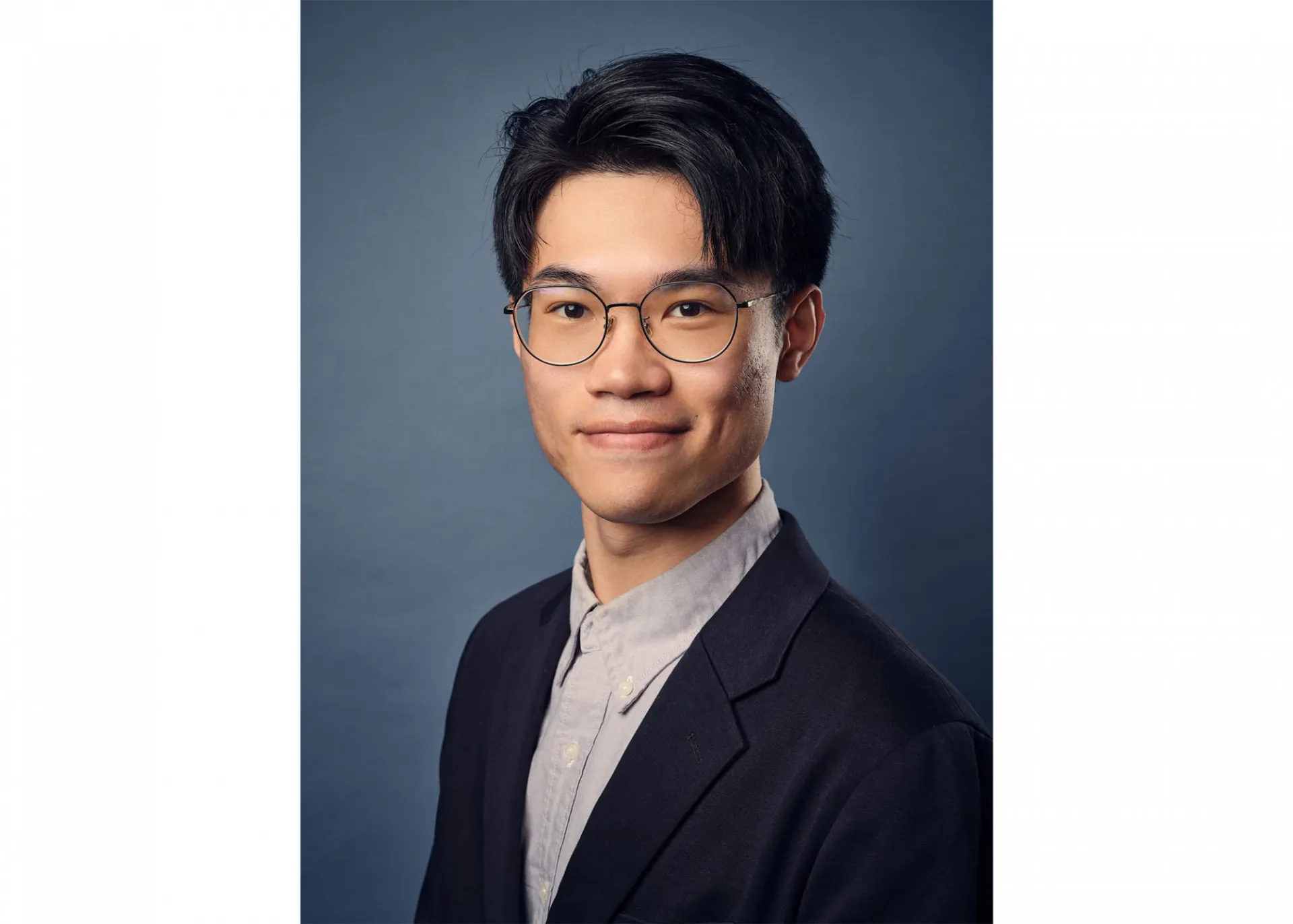
Ray Li, a graduate student in Columbia Engineering’s Master of Science in Operations Research program, joined the Office of Sustainability in November 2025. Since then, Ray has played a key role in supporting Columbia’s participation in the Plant-Powered Carbon Challenge (PPCC), an initiative aimed at reducing the carbon footprint of food procurement.
Before coming to Columbia, Ray earned a bachelor’s degree in economics from Renmin University of China in Beijing, where he developed an early interest in environmental protection and sustainability, including coursework in carbon accounting and carbon neutrality. His work with the Office of Sustainability centers on calculating annual food-related emissions using dining procurement data — a complex process that involves coordinating with food suppliers, cleaning and restructuring large datasets, and applying emissions calculations through the CoolFood calculator developed by the World Resources Institute.
Beyond executing the analysis, Ray significantly improved the team’s workflow by developing a Python-based tool capable of processing more than 50,000 rows of data efficiently. The tool reduces manual intervention, minimizes categorization errors, and creates a more streamlined, reproducible system for tracking food carbon intensity over time. This advancement enables the team to more easily scale their analysis as new data becomes available and strengthens the reliability of reporting to stakeholders.
In addition to his work on food emissions, Ray has supported broader sustainability efforts by helping organize and analyze datasets related to materials management and transportation. Across projects, he has focused on turning complex, high-volume data into actionable insights that inform strategic decision-making.
“Ray is a quick learner with excellent analytical capability,” said Samreen Afzal, Director of Analytics for the Office of Sustainability. “He demonstrated these qualities by understanding a large dataset within a few weeks and transforming it into a clean, automated pipeline that the team can rely on. He is also a strong team player: proactive, collaborative, and always looking to connect the dots to understand the broader impact of our work.”
Through his experience, Ray has gained a deeper understanding of how sustainability operates within a complex institutional setting. His work has highlighted the significant environmental impact of everyday campus systems, particularly dining, and reinforced the importance of data-driven approaches to managing those impacts.
Looking ahead, Ray plans to apply the analytical and optimization frameworks he has developed at Columbia to address complex challenges across industries. While his current work focuses on sustainability, his broader goal remains consistent: transforming messy data into clear, compelling stories that drive meaningful action.