Staff Profile: Mike Pagan, Assistant Vice President of Administrative Services
We asked Mike some questions about how his work incorporates sustainability and contributes to Columbia’s net zero goal.
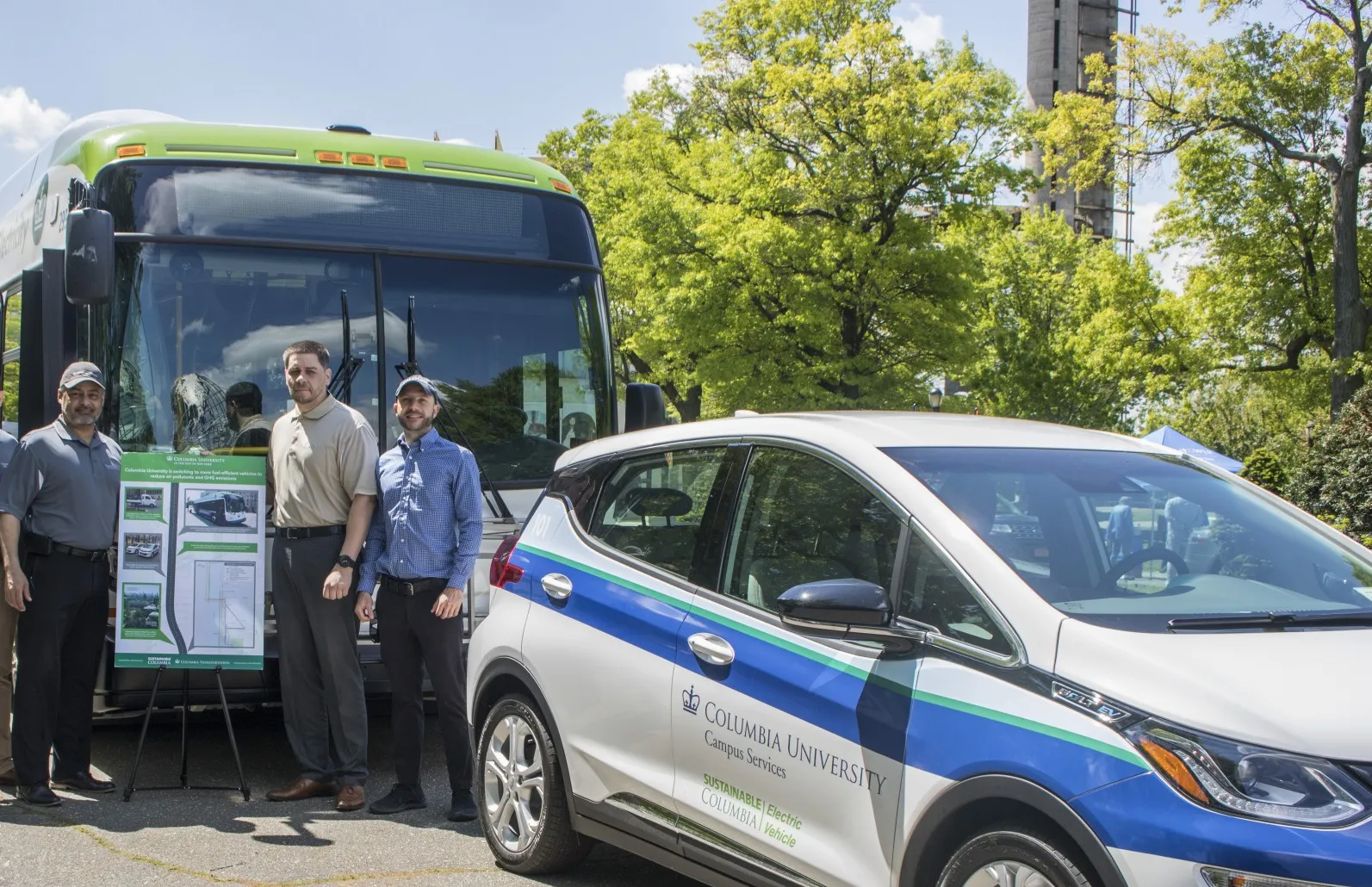
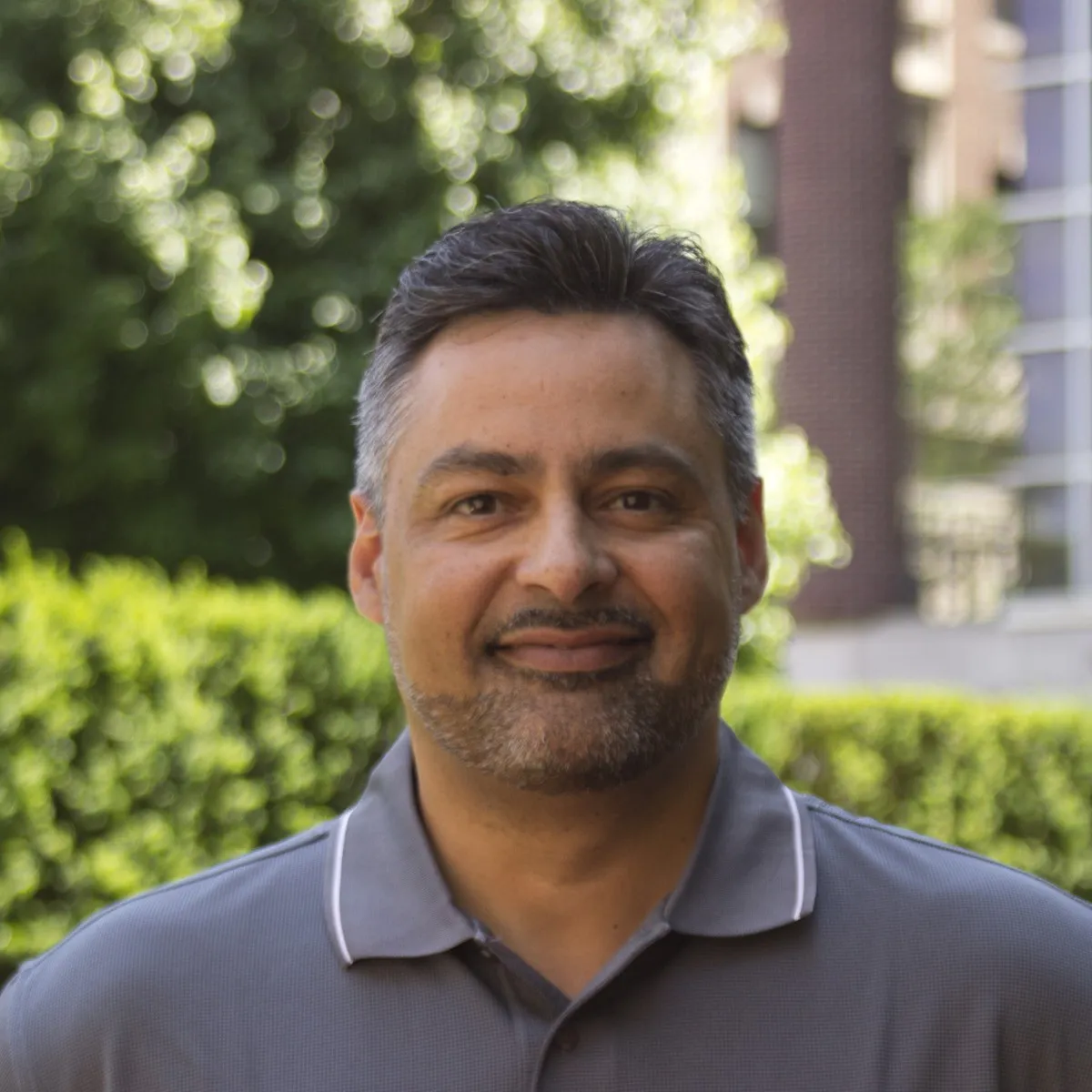
Mike Pagan is the Assistant Vice President of Administrative Services within Columbia University Facilities and Operations. As the leader of the Columbia Mail, Columbia Print, and Columbia Transportation departments, Mike provides strategic and operational oversight with a focus on customer service, operational efficiency, and sustainable solutions.
Since joining the University in 2004, Mike has led the organization with his significant operational experience and expertise. He spent nearly two decades in healthcare administration, first in a staff position at Mt. Sinai Hospital and rising to Corporate Director of Materials Management at St. Luke’s-Roosevelt Hospital.
We asked Mike some questions about how his work incorporates sustainability and contributes to Columbia’s net zero goal.
Q: What does sustainability mean to you in relation to your work at Columbia?
A: In many ways, I look at sustainability as a natural outcome or byproduct of trying to be efficient, responsible with budget, and trying to achieve excellence. Some examples in Transportation can be seen in how we’ve merged shuttle routes to reduce the number of buses (therefore reducing carbon and costs) or adding commuter angles to our Intercampus shuttles to reduce the number of staff members who drive to work. These initiatives play directly into Columbia's Sustainable Transportation goals in Plan 2030.
In Mail, it’s rightsizing our vehicle matrix to match vehicle size to mail volumes, sharing vehicles with other departments to minimize the need for rentals, or condensing vehicle mail routes to help achieve fuel savings.
In Print, it’s taking advantage of multi-function copiers that allow Columbia to reduce the number of other energy consuming devices like fax machines, scanners, and desktop printers (“managed print”). Our in-house print shop also sources sustainable paper and has significantly expanded our in-house capabilities to reduce the need to farm out jobs, reducing fossil fuel vehicle deliveries to campus.
Many of these practices and strategies were put into place long before the drafting of the sustainability plan or the Office of Sustainability was formed. In short, sustainability to me means taking advantage of in-house resources (assets, services, and staff) to reduce outsourcing and the significant carbon footprint that comes along with it.
Q: What is one sustainable practice or achievement in your department that you are proud of?
A: The recent decision to centralize the management of our Facilities and Operations division of a 65+ vehicle fleet in order to standardize operational practices like fueling, safe driving, procurement/replacement, and maintenance. This program — born primarily to standardize the aforementioned practices — now allows us to focus on greening the fleet and implementing a standardized charging infrastructure that will expedite achieving Plan 2030 and net zero by 2050 commitments.
While solid strides have been made to-date to green the fleet, the centralized program allows us to hone in on the latest trends and technology while our operations teams can focus on keeping us safe, maintaining our campuses, and serving our students, faculty, and staff. This initiative now has the division laser-focused on meeting commitments. We are working to bring best-in-class practices that can also be adopted by other Columbia departments so that the entire university can migrate faster to sustainable vehicle options.
Only 12 months in, we’ve already assisted and provided consultation in procuring eight sustainable vehicle options, some outside of our division, that includes the first electric vehicle ordered by the President’s Office.
Q: What is something you would like to implement in the future, or are in the process of implementing in regards to sustainability?
A: While we’ve made great strides in sustainable transportation with the support of senior leadership, there are four components that require immediate vehicle charging infrastructure buildout in order to maintain momentum:
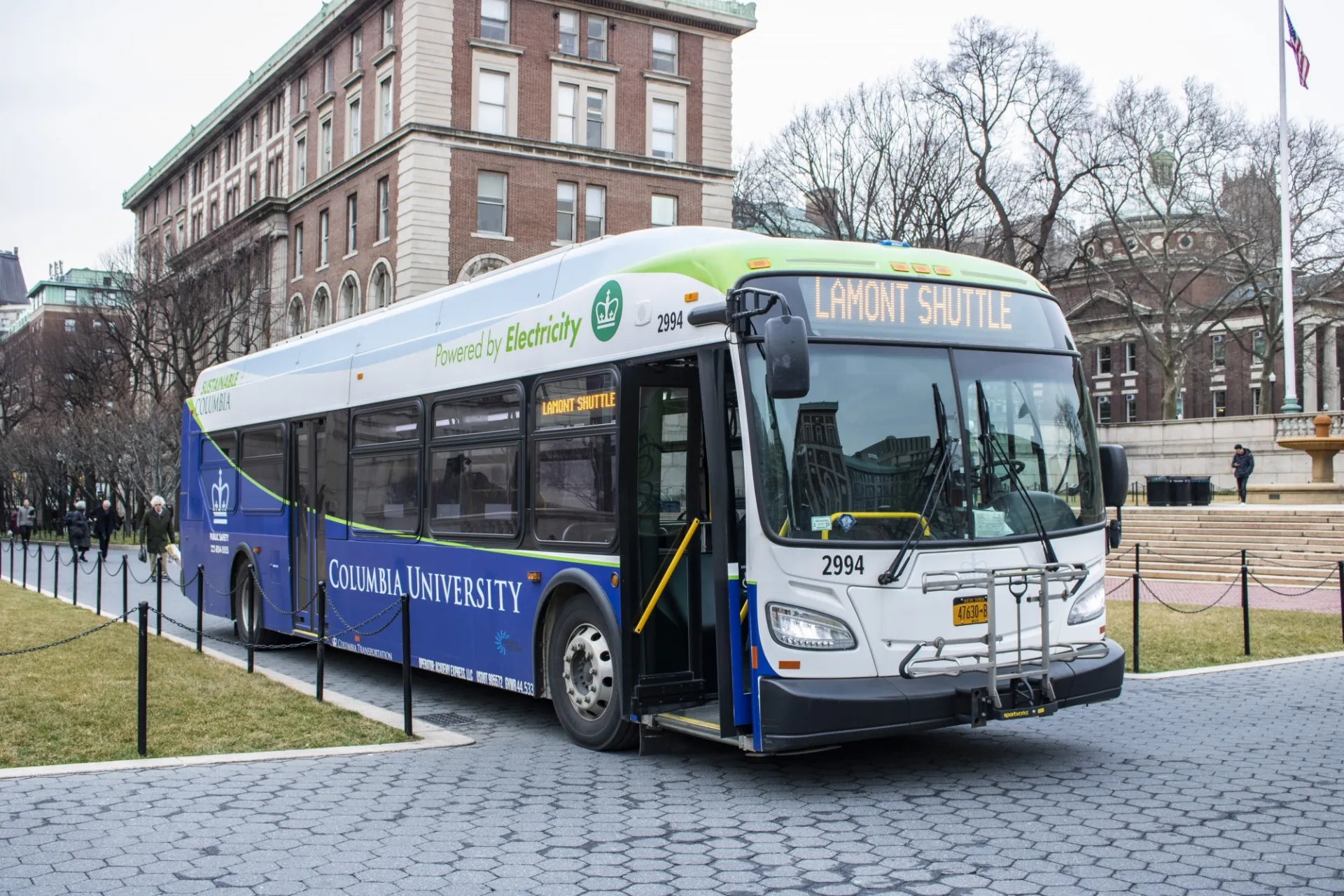
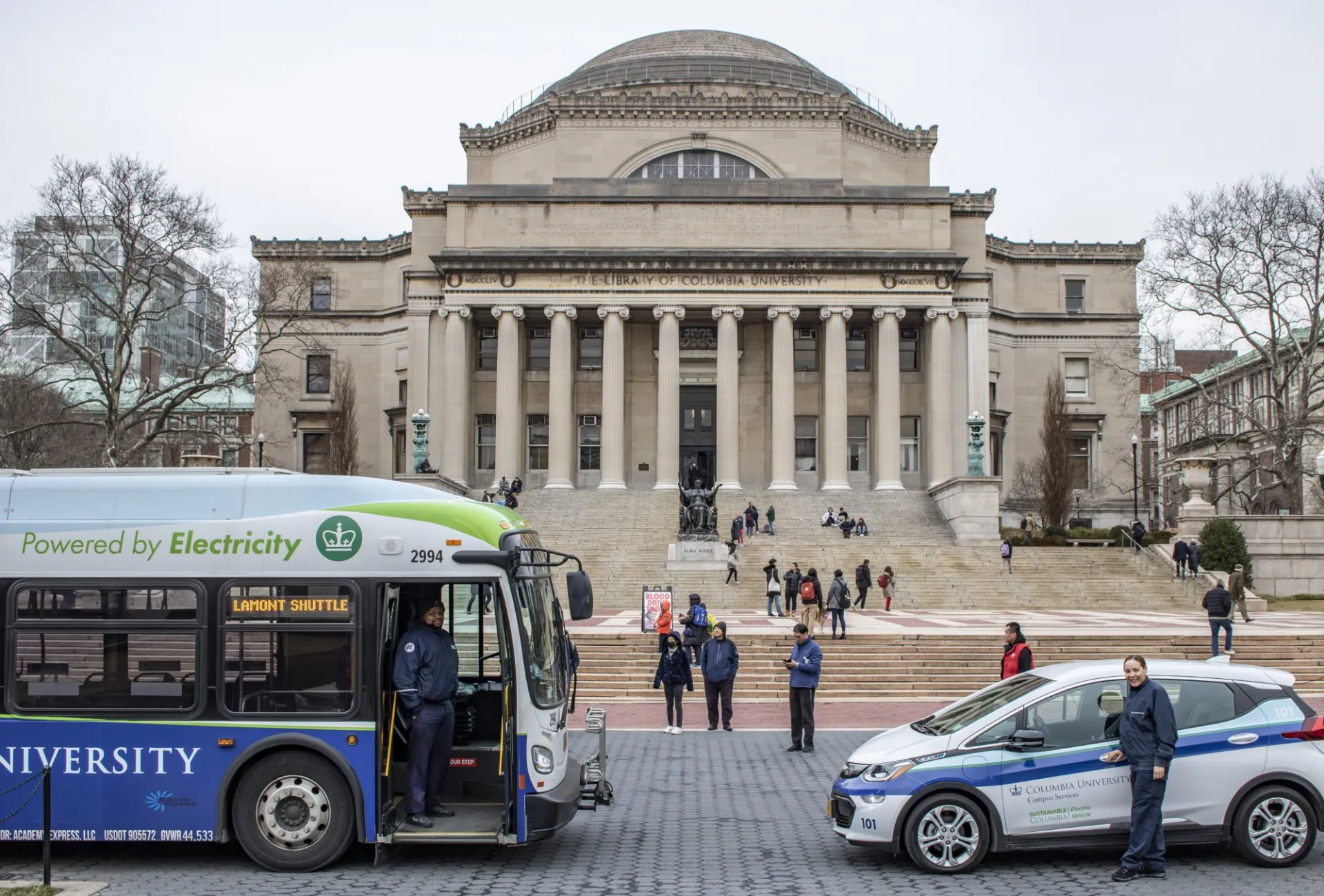
- Campus Shuttles - an early adopter of six electric buses (first in the Ivy League and one of the first in NYC), continued growth in our routes and schedules requires the need for more electric buses and more robust charging.
- Our colleagues in the Parking Office are also charged with expanding electric charging in their garages to encourage faculty and staff adoption of electric vehicles.
- The centralized fleet continuous plan to electrify is outpacing our current charging capacity.
- Other Columbia shuttles and vehicles outside of Facilities and Operations that are still to adopt sustainable options.
NYC power grid challenges, our campus’s power limitations, significant operational considerations, and new (and not fully tested) technology and service providers are just some of the charging challenges that we need to push through in order to make our transportation sector as sustainable as it can be.
Transportation is a very visible part of Columbia and a way to show NYC and our immediate community that we are not just “all talk.” I am so proud to be a part of what has been a very aggressive approach by the University to “walk the walk,” and I look forward to taking on this next challenge.