Columbia Sustainability Leaders Share Campus as Lab Insights at AASHE 2026
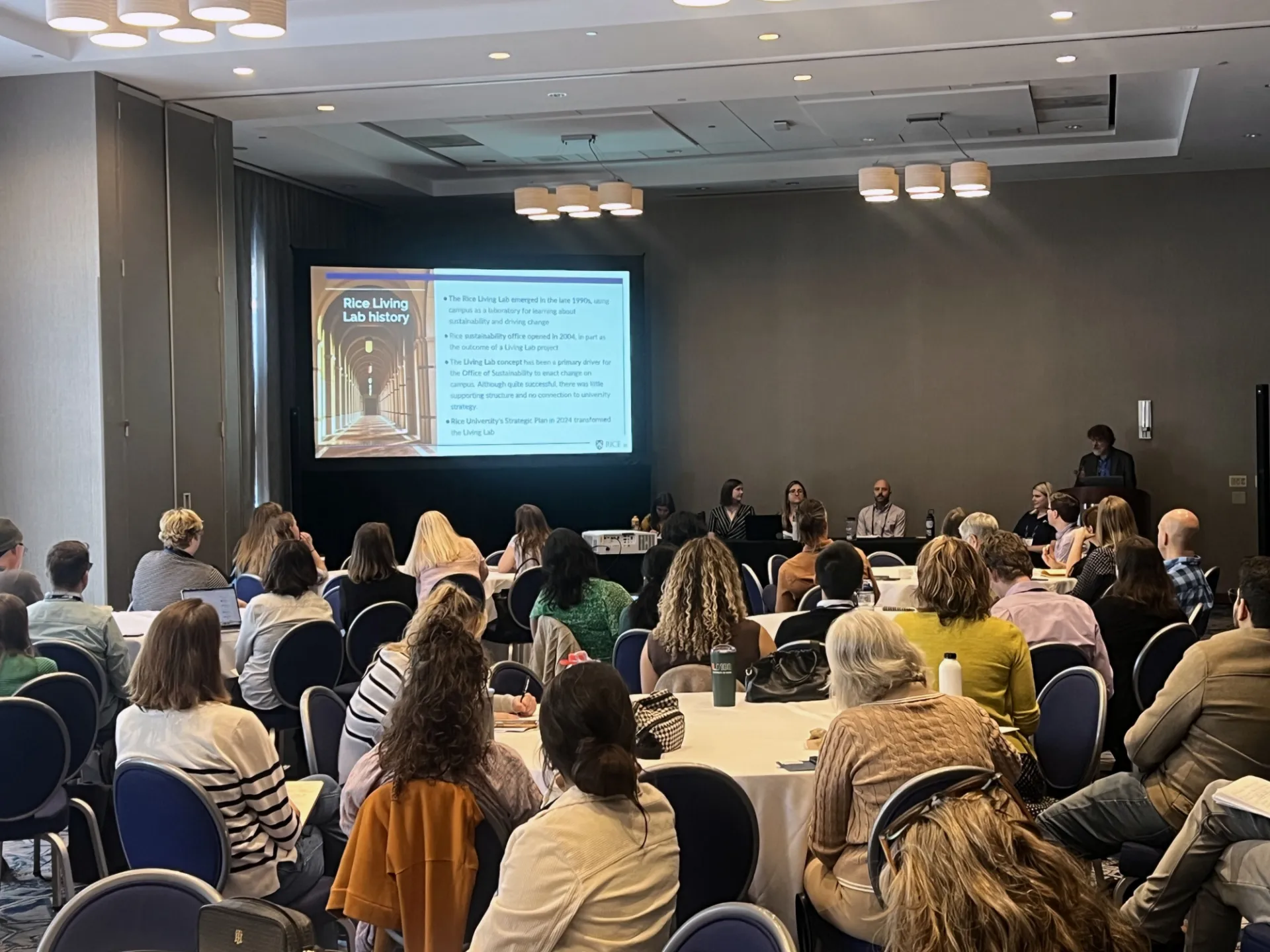
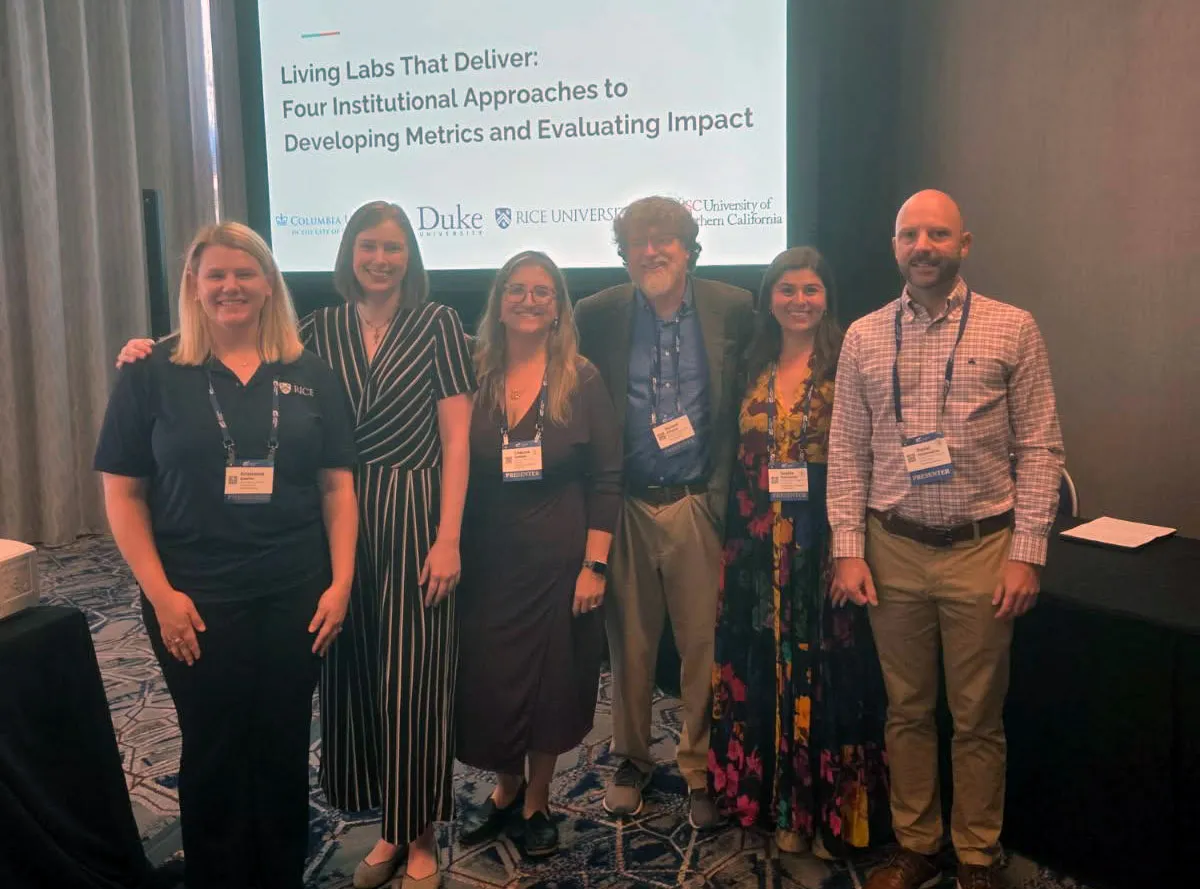
Columbia University’s Office of Sustainability joined sustainability professionals from across North America at the 2026 Association for the Advancement of Sustainability in Higher Education (AASHE) Conference & Expo, where staff presented alongside peers from Rice University, Duke University, and the University of Southern California during a collaborative session exploring how institutions can evaluate and communicate the impact of campus living lab programs.
The session, titled “Living Labs That Deliver: Four Institutional Approaches to Developing Metrics and Evaluating Impact,” focused on the growing role of campuses as real-world environments for sustainability learning, research, experimentation, and innovation. Presenters shared strategies for measuring outcomes, demonstrating value, and advancing applied learning programs that connect academic coursework with operational challenges.
For Columbia, the presentation highlighted the University's expanding Campus as Lab (CAL) program, a key commitment area within Columbia's sustainability plan. The initiative leverages the University's campuses, operations, and academic expertise to create hands-on opportunities for students while helping advance sustainability goals across the institution.
Dan Allalemdjian, Director of Sustainability and Transportation in the Office of Sustainability, represented Columbia at the AASHE Conference.
"Campus as Lab reflects one of the most effective ways universities can connect learning with action,” Allalemdjian said. “Students gain valuable real-world experience while helping address meaningful sustainability challenges on campus.”
Over the past two years, Columbia's CAL program has experienced significant growth through intentional outreach to both academic and operational partners. The Office of Sustainability serves as a bridge between schools, faculty, students, and operational departments, creating opportunities for course-based projects, internships, research collaborations, student-led initiatives, and applied sustainability consulting.
The presentation outlined how Columbia measures the impact of these collaborations through both quantitative and qualitative metrics. Data points include the number of students engaged through courses, internships, and projects, as well as feedback about learning outcomes, skills development, and overall student experience. The Office of Sustainability shares these results through online dashboards, annual sustainability progress reports, and project storytelling that showcases the value of campus partnerships.
The session also underscored the importance of collaboration across institutions. Columbia joined colleagues from other universities to compare approaches, discuss challenges, and identify best practices for assessing living lab programs. Participants engaged in facilitated discussions designed to help institutions develop meaningful metrics and strengthen the impact of applied learning initiatives on their campuses.
The conversation is particularly timely as colleges and universities continue to expand experiential learning opportunities and seek ways to demonstrate their value. AASHE, which hosts the annual conference, also administers the Sustainability Tracking, Assessment & Rating System (STARS). STARS recognizes institutions that establish processes for assessing the success of applied learning and living lab projects, further emphasizing the importance of measuring impact and sharing results.
By contributing to the conference dialogue and learning from peer institutions, Columbia continues to help shape the future of its CAL programming, strengthening opportunities for students to engage in sustainability work that delivers tangible benefits for both the University and the broader community.