
Staff Profile: Samreen Afzal, Director for Analytics in the Office of Sustainability
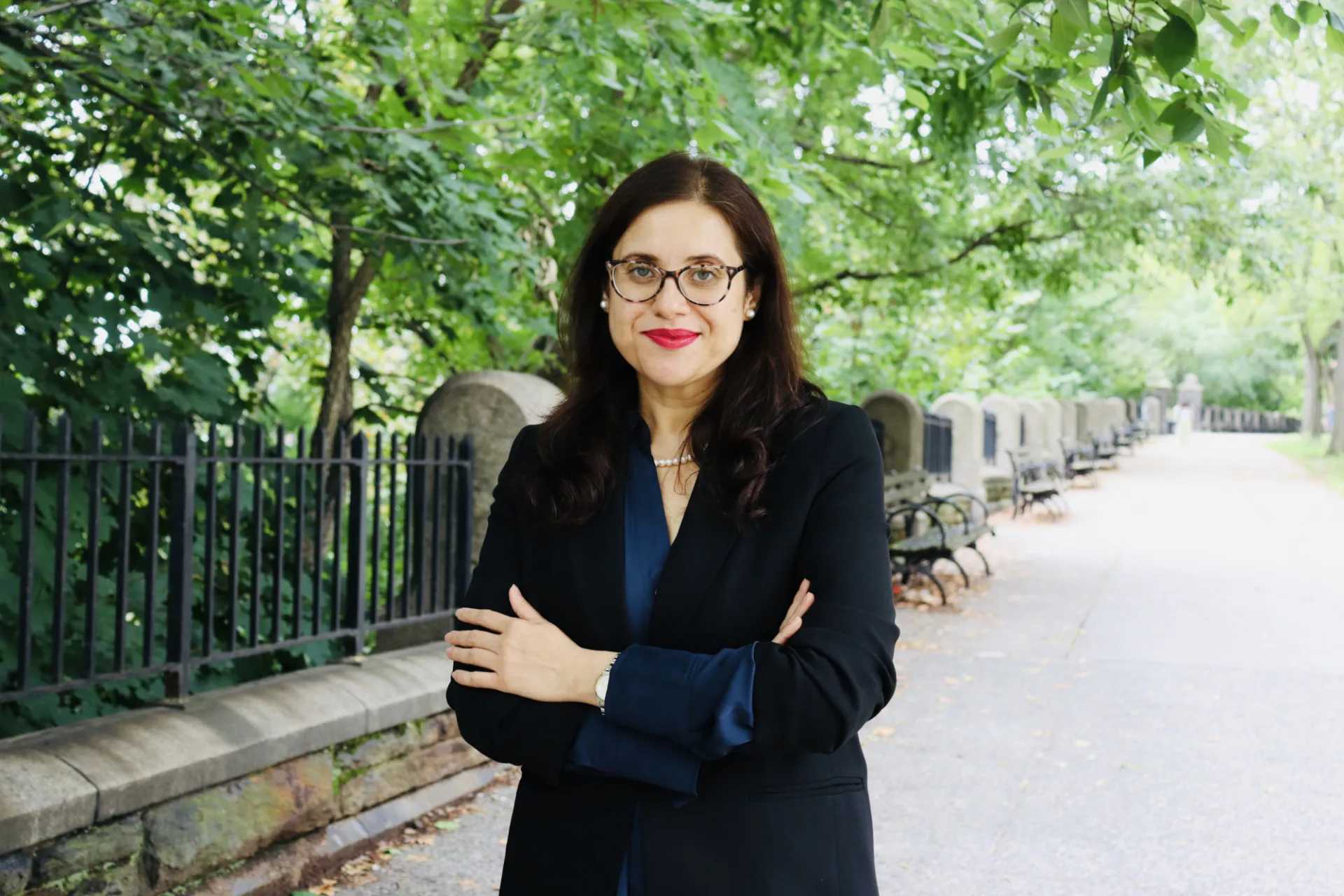
Samreen is the first to fill the role of Director, Sustainability Analytics, responsible for creating and implementing a strategic plan to centralize sustainability metrics and employ more rigorous and frequent analytics that ensure Columbia achieves Plan 2030 goals. In this role, she oversees the development of both internal and externally-facing sustainability data hubs and curates detailed metrics to support senior level decision-making.
Samreen joined the Office of Sustainability after completing her Master of Science in Sustainability Management (SUMA) at Columbia. While completing the SUMA program, she worked part-time with the New York Housing Authority's sustainability team on their energy and electrification projects. Her previous work experience included a decade long progressive career at Shell Inc. Before SUMA, Samreen studied Computer Science from NUST (National University of Science and Technology, Pakistan) and earned her MBA in Marketing, Business Management, and Supply Chain.
We asked Samreen some questions about how her work contributes to Columbia’s sustainability mission.
Q. What does sustainability mean to you in relation to your work at Columbia?
A. As Director of Analytics, I anchor our organizational strategy in sustainability analytics, an emerging, highly specialized field where standard playbooks do not yet exist. Managing sustainability analytics requires navigating complex, conflicting priorities and building data infrastructure where traditional systems are immature or sparse. I specialize in engineering these measurement frameworks from the ground up, translating raw coding, data modeling, and reporting into robust decisions.
Data only has power if people can understand and act on it. A vital part of my role is translating dense datasets into compelling visuals and narrative-driven analyses, transforming abstract metrics into human stories that clear up confusion and inspire alignment. By making complex sustainability data intuitive and accessible, I bridge the gap between technical engineering and organizational empathy, helping our teams see exactly where we are and where we need to go.
This human-centric approach is critical to our organizational landscape. By establishing empirical, institutional-grade measurements, I strive to create the foundation required to mitigate greenwashing risks and maintain stakeholder trust. Furthermore, as global ESG regulatory frameworks tighten, our data infrastructure ensures strict compliance while identifying operational inefficiencies that cut supply chain waste. Ultimately, precise sustainability analytics allow us to de-risk our future and optimize capital allocation. In this evolving landscape, I am proud to pioneer the data methodologies that protect our organization and shape a sustainable future.
Q. What is one sustainable practice or achievement in your department that you are proud of?
A. As an analytics leader, I designed a robust data framework to evaluate vast volumes of vendor procurement, successfully proving the viability of Scope 3 carbon accounting in a difficult data environment. True progress in sustainability depends on human collaboration, which is why a central pillar of this initiative was mentoring a diverse, global team of data analysts. By actively coaching them through a new professional environment, navigating language barriers, and aligning distinct working styles, I fostered a high-performing team capable of translating highly complex datasets into intuitive, actionable dining strategies. Together, our data-backed interventions successfully decoupled carbon emissions from organizational growth across Columbia's millions of annual meals. This collaborative effort not only aligns our culinary operations with Plan 2030’s net-zero mandates, but it also demonstrates how inclusive leadership can turn abstract environmental metrics into a repeatable benchmark for institutional change.
Q. What is something you would like to implement in the future, or are in the process of implementing in regards to sustainability?
A. Looking ahead, a major strategic focus is standardizing the accuracy and consistency of our energy measurement across our entire building portfolio. Because carbon performance must be managed building by building, our success depends entirely on the integrity of our underlying data. Consistent, unified measurement across every campus is what allows us to audit building performance fairly, identify anomalies, and guarantee that reported reductions are ironclad. We are currently collaborating with an external data partner to consolidate disparate meter data into a single, continuous stream. By integrating this pipeline directly with the University's business intelligence systems, we are establishing a single source of truth that aligns senior leadership's strategic vision with the day-to-day operations of our facilities teams.
Beyond core infrastructure, the next frontier shaping this space is Artificial Intelligence. Rather than treating AI as a trendy tool, I view it as a specific structural solution and strategic multiplier for data ingestion, harmonization, and predictive modeling within complex Scope 3 categories. Institutional procurement, capital goods, and business travel all rely on fractured vendor methodologies that are resource-intensive to standardize manually. AI models are uniquely suited to solve this exact data harmonization problem. Integrating them into our framework is a primary objective that will allow us to scale our impact and lead the industry in institutional climate accounting.