
Plan 2030 - Cloned

Columbia University Sustainability Plan, 2021-2030

Plan 2030 is a ten-year strategic plan that outlines aggressive sustainability goals, grounded in climate science, for Columbia’s New York campuses to achieve net zero emissions by 2050. Building on the goals achieved in its first sustainability plan, Columbia has developed this plan in conjunction with its own Earth Institute scientists and faculty, using guidance from the Science Based Target initiative (SBTi) and the United Nations Environment Programme (UNEP) to establish principles and measurable targets that will help ensure Columbia will achieve this goal. Achieving these targets requires an increased commitment across all areas of the University, and the ability to model sustainable values within every part of its culture – the way it educates, operates, designs, constructs, and manages resources.

Read the full Executive Summary.
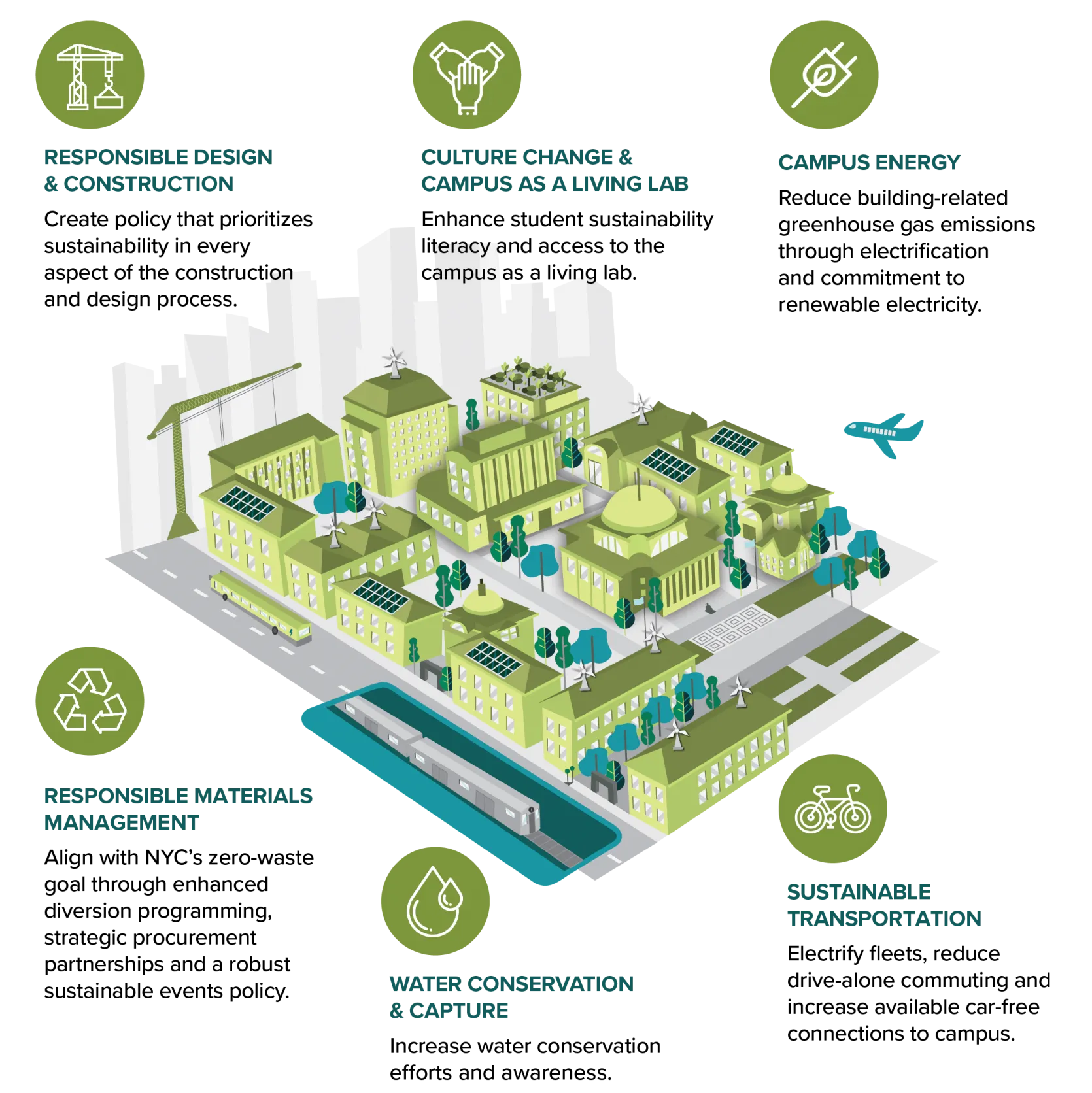
An illustration of Columbia's Morningside Campus with green infrastructure, such as wind turbines and solar panels, implemented into the design. Surrounding the illustration are six icons representing the six focus areas of Plan 2030: Campus Energy, Sustainable Transportation, Responsible Design and Construction, Culture Change and Campus as a Living Lab, Responsible Materials Management, and Water Conservation and Capture.

Commitment Areas

To achieve the targets outlined in the Climate Leadership and Trajectory to Net Zero sections, the University has set specific goals with detailed strategies in six key commitment areas below. The content in these areas was developed by sustainability planning working groups with faculty, student, and administrator participation.

placeholder image card 1
Campus Energy

Achieve net zero emissions by 2050 or sooner, with an eye toward on-campus solutions.

placeholder image 4
Sustainable Transportation

Reduce emissions from on-campus fleet vehicles, commuters, and business travel.

placeholder image card 2
Responsible Design and Construction

Ensure the design, construction, and refresh processes at all campuses support the University’s long-term goal to both decarbonize and achieve zero waste.

placeholder image card 3
Culture Change and Campus as Living Lab

Columbia commits to enhance student literacy and access to the campus as a living lab.

placeholder image 5
Responsible Materials Management

Includes goals centered on zero waste to landfill, sustainable events, retail tenant alignment, and sustainable procurement.

placeholder image 6
Water Conservation and Capture

Columbia commits to water conservation, capture, and awareness.